

With so many options on the market, buying a football goal for the first time can feel like a daunting prospect.
It’s the same whether you’re a club volunteer managing equipment for a local grassroots team, a school teacher looking to update your ageing posts, or a parent searching for a safe and strong garden goal for your children.
We’re here to help. It’s our firm belief that finding the right goal for your circumstances shouldn’t be complicated.
In this article, we’ll go through the key factors you need to consider, so when you’re ready to buy, you can make a confident, well-informed decision that fits your exact needs and budget.
What different types of football goals are there?
Football goals come in several distinct styles. Which one is best for you depends on where they will be used and how often they need to be moved:
- Socketed Goals: Permanently or semi-permanently installed into ground sockets concreted into the field. These give maximum stability and are a good choice for grass pitches.
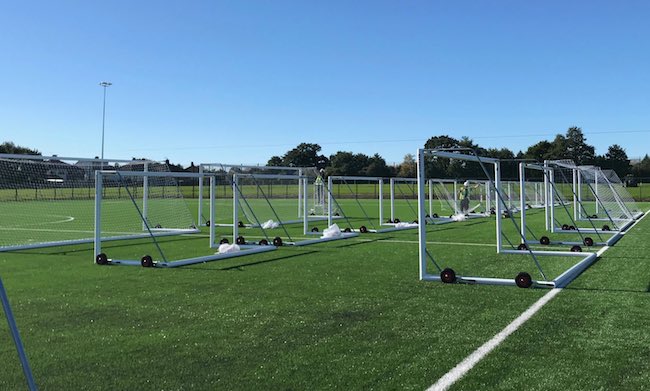
- Freestanding Goals: These goals don’t need permanent ground sockets, so they can be moved around a pitch or facility. They’re ideal for multi-use grounds, places that have artificial turf, and sports halls where permanent installation isn’t possible.
- Foldable Goals: A form of freestanding goal that’s designed for quick setup and easy storage; these are great for facilities short on space.
- Self weighted Goals: Freestanding goals need to be secured safely, using weights, chains or other anchors to avoid the risk of falling. Self weighted goals have the correct amount of weight built into the frame to be safe without the need for external anchors.
- Fence-Fixed Goals: These fix directly onto perimeter fencing around small-sided pitches or multi-use games areas (MUGAs) to save space and reduce the need for goal removal.
- Garden Goals: Specially sized goals, designed for a kickabout in the garden. These range from cheap plastic collapsible goals to high-quality aluminium goals that have a focus on safety and durability.
Why are there so many different goal sizes?
Goal sizes are directly linked to age groups (such U7s, U15s, etc.) and official game formats (such as 5v5, 7v7, 9v9, and 11v11). Choosing the right size helps players develop appropriate skills and enjoy the game more. For a full guide to the official dimensions for each age category, check out our article on the FA-recommended goal sizes by age group.
What different materials are football goals made of?
Generally, football goals are either aluminium, steel or uPVC.
- Aluminium: Lightweight, highly durable and naturally rust-resistant. Aluminium goals are used by professional clubs, schools, and grassroots teams alike for their ease of movement and long lifespan.
- Steel: Heavy-duty and exceptionally strong. Steel goals are ideal for permanent socketed pitches, often open to the public, where extra strength and durability are required to cope with the weather and heavy use.
- uPVC: Highly flexible, affordable, and weather-proof. uPVC goals are often used for residential garden play, junior training or lightweight portable setups.
When you’re deciding which material you should opt for, consider how you’re going to use your goal. Aluminium is a great balance of durability and lightweight mobility, steel gives you robust stability, while uPVC offers an economical option for playing at home.
Key terminology to know before buying a football goal
Knowing the names of common goal components and specifications will make it easier for you to compare:
- Uprights: The vertical side posts of the goal frame.
- Crossbar: The top horizontal bar connecting the two uprights.
- Socket: A tube set into the ground that the goalposts slot into for support.
- Anchor: A fixing device (such as ground pegs, chain anchors or counterweights) used to secure freestanding goals and prevent tipping.
Safety considerations to keep in mind when buying a football goal
- Safety should always be your top priority when choosing and operating football goals.
- Look for goals certified to the latest British and European Safety Standards, specifically BS EN 748 and BS EN 16579.
- Unsecured or poorly constructed goals pose a serious risk of tipping over during play or in high winds. Always ensure goals are anchored using suitable counterweights, ground pegs or socket fittings at all times when using them.
- You should carry out routine safety checks before every use, and thorough safety and maintenance checks on a regular basis.
For an in-depth expert guide to safety guidelines, read our football goal safety regulations guide.
How to choose the right football goal for your budget, location, and use
To make sure you get the correct goal, there are three main areas to consider: budget, location, and intended use.
Budget
Premium aluminium goals are a higher initial investment but give you the best mix of strength, mobility, weather resistance and safety. Steel is usually slightly less expensive, while entry-level uPVC offers high accessibility for lower budgets and garden play.
Location
Think about the playing surface and storage facilities where the goal is going to be used. Wheeled goals work best on artificial turf and multi-sport pitches where socket installation isn’t possible, while socketed goals suit permanent grass pitches. If you’re short on storage space, look at folding goals, and if you’d rather not deal with the extra hassle of extra anchorage, look at self weighted goals.
Use
Proper matches need sturdy goals that meet official FA specifications, whereas casual backyard play or training exercises can be well served by lightweight, quick-setup portable models.
Where can you buy a football goal that’s right for you?
Now that you have these key insights on types, materials, terminology and safety standards, you can make your choice with confidence and enjoy years of playing safe, fun football.
Ready to find the perfect goal? Explore our full range of football goals today.