

In football, goals are important, but goal safety is vital.
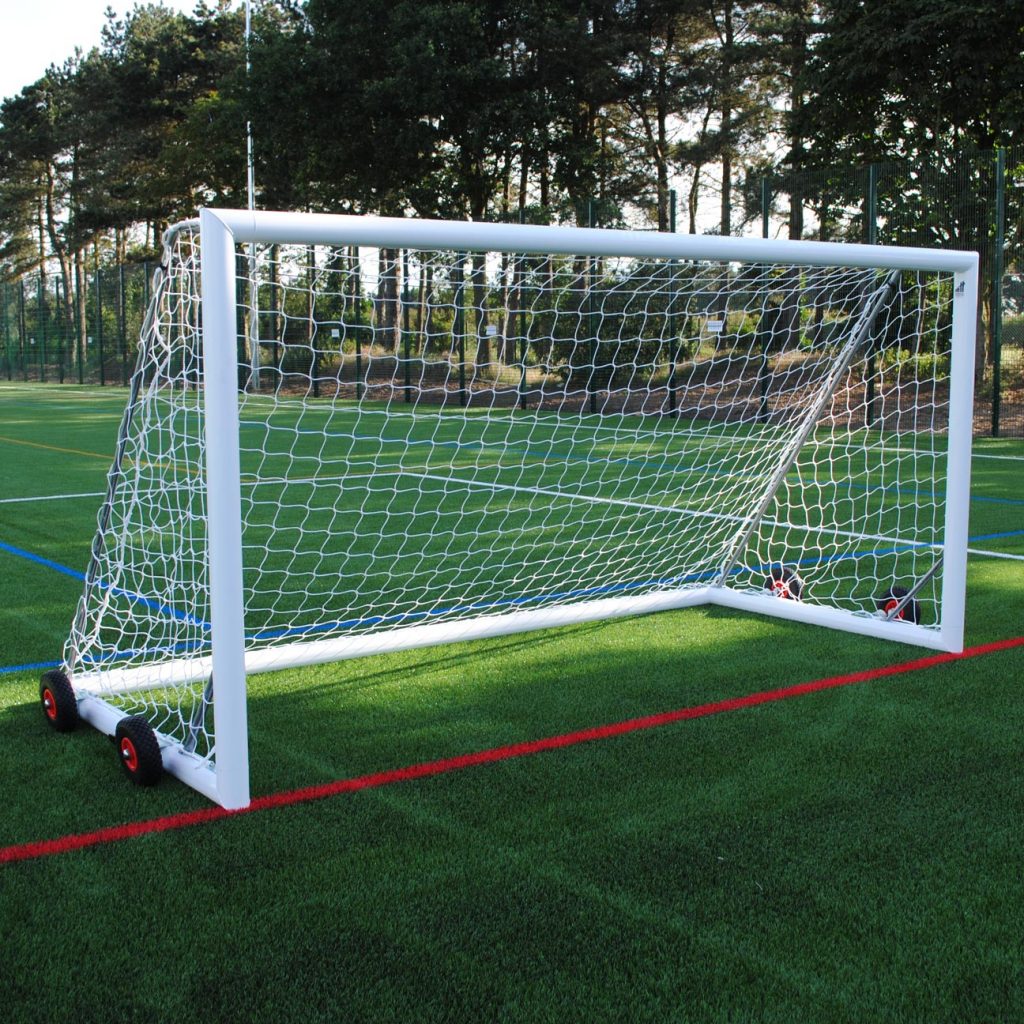
In any sport, there is a risk of injury, but everyone involved has a responsibility to minimise that risk. Making sure your goalposts are manufactured, set up and maintained correctly is key to avoiding unnecessary injury to players, officials and ground staff.
This guide is for anyone involved in purchasing and/or setting up goals, so you know what to look for when buying, how to install and use them safely, and how to keep them maintained so they stay safe for longer.
(Make sure to read our helpful article if you want to ensure you’ve got the right-sized goal for your game.)
What are the safety considerations for football goalposts?
There are several areas to look at when it comes to the safety of football goalposts.
Stability
A falling goal is a danger, so it’s important they are secured to the ground correctly, which makes them unlikely to tip over due to strong winds, players swinging on the crossbar, or accidental impact during play.
Socketed goals need to be fitted into the right-sized sockets, and the depth of the sockets should also be correct. Sockets should also be covered when not being used.
Freestanding goals are generally more susceptible to falling. Regardless of the size or weight of the goal, it must be secured to the ground at all times when in use. Failing to anchor your goal with the correct weights is a leading cause of accidents, so choosing the correct anchoring method is essential.
You have several options when it comes to weighting your goals – sandbags, counterweights (sometimes known as ‘handbag weights’), chains attached to secure points, and football goal anchor pegs are all valid ways of keeping your goals upright.
Another option is to buy self-weighted goals. These have sufficient weight built into the frame so you don’t need any extra anchoring.
Construction
The design and manufacture of the goalposts is a major factor in how safe they are. Latest regulations aim to eliminate the hazards, but many older goalposts have dangers, such as levers which act as shear points for an unfortunately placed digit.
Other areas to be aware of are nets and net channels that could entrap fingers, limbs and heads, and goals made with cheap or thin metal that can break easily, potentially leaving sharp edges as an extra hazard.
Maintenance
Poor maintenance can lead to hidden dangers. Over time, metal fatigue, rusted joints, or loose bolts will compromise the goal’s strength. Netting that is not properly secured can pose an entanglement risk. You need to carry out regular checks and necessary maintenance to ensure the frame remains rigid and that all safety features remain functional and intact. A little bit of regular care will protect people, and save you far higher costs in the future. You can get your exclusive MH Goals Maintenance Guide here.
Moving and storing
The majority of goal-related injuries happen when the goals aren’t even being used. Poor lifting technique, failing to prepare the goal correctly, incorrectly fitted wheels, and leaving them unsecured can all be dangerous to ground staff and members of the public.
What are the football goal POST safety regulations in the UK?
In the UK, football goal post safety is governed by health and safety legislation and sporting body requirements. The British Standards Institute (BSI) and the Health and Safety Executive (HSE) take a keen interest in goal safety, especially in public spaces and schools, because falling goalposts have historically caused serious injuries. The HSE requires anyone with control of non-domestic premises, such as village halls and playing fields, and amateur sports clubs to take reasonable measures to ensure any equipment provided is safe for people using it.
The FA Requirements
The Football Association (FA) also sets strict regulations for football goal posts that all affiliated clubs must follow. FA regulations say all goals used in league matches and training must be stable and properly secured. This includes a total ban on homemade goals or those with dangerous components like metal cup hooks.
To help clubs, schools and other organisations meet their responsibilities, specific British and European standards have been developed to define what goalpost safety looks like in practice.
Understanding BS EN 748 and BS EN 16579 standards for football goals
It’s obviously more difficult to be compliant if you don’t understand the standards you need to meet in the first place. While at first they can look a bit daunting, this section will help you make sense of what they mean.
The main safety standards you need to know about are BS EN 16579 and BS EN 748. You may also see them noted as EN 16579 and EN 748; this is simply because they originated as European Standards and were then adopted into the UK’s British Standards, where the ‘BS’ was added. Our Managing Director, Mark Harrod, was heavily involved in the creation of both standards, so if you have any questions about either, please get in touch!
BS EN 748 (BS EN 748:2013+A1:2018)
This standard was developed by CEN (the European Committee for Standardisation) and covers functional and safety requirements, plus the methods used for testing. It covers all portable/freestanding and permanent/socketed football goals weighing more than 10 kg, for all forms of football and all age groups. It’s the standard for full-size senior goals (24′ x 8′) and the larger youth size (5m x 2m).
BS EN 16579 (BS EN 16579:2018)
This came after BS EN 748 and introduced some significant changes to how goals should be tested and manufactured. It included regulations about shear points and the dangers of finger, limb and head entrapment. It made the tip test more stringent, required a greater force to be applied to the goal frames when strength testing, and medium-weight goals were given their own set of requirements to pass.
Both standards are important, and you should never buy a new goal without it being BS EN 16579 compliant. However, it doesn’t mean you need to rush out and replace all your goals that were built before these standards came into force. As long as they’re being regularly inspected and properly maintained, you can carry on using them. We carry all the spares and replacements you may need to keep your goals in top condition.
Read our article about BS EN 16579 to find out more about the requirements and how we test our goals to ensure they comply. Or get in touch with any questions you have about standards and we’ll be happy to help.
What are the legal requirements for football goals in educational settings?
Under the Health and Safety at Work Act, all schools, local authorities and sports clubs have a legal duty of care to make sure all equipment provided for use is safe.
This means if a goal is poorly maintained or incorrectly set up (for instance, with the wrong anchorage) and causes an injury, the organisation responsible could face significant legal consequences and fines from the HSE.
Apart from keeping people safe, it’s why you should carry out regular risk assessments and documented inspections, as these are essential tools for demonstrating you’re meeting your duty of care. An inspection should check for things such as loose bolts, broken fixings, damaged sections, as well as verifying the goal is secured correctly with the right football goal anchors. See our in-depth guide to carrying out inspections for full details, and our winter safety check guide for when your goals are at their most vulnerable.
Where can you buy safe, compliant football goals and anchoring equipment?
Safety has always been our number one priority at MH Goals. Our MD, Mark Harrod, has been advising on sports equipment safety at the very top level for decades, and that passion runs through our entire company. Every football goal we make meets or exceeds the very latest safety standards, and we offer equipment maintenance checks and free advice on safety matters to all our customers.

Being safe isn’t difficult or particularly time-consuming. With the right goal, regular inspections and proper maintenance using the correct parts, your games can be safe for years to come. See our safety guide for a complete guide on every aspect of goalpost safety, and feel free to get in touch with us using the contact details at the bottom of the page if you have any safety or maintenance questions.